
PC and Progress
*A conversation starter, by Combined Arms Consulting — is this a conversation worth pursuing for your enterprise? Please reach out.*
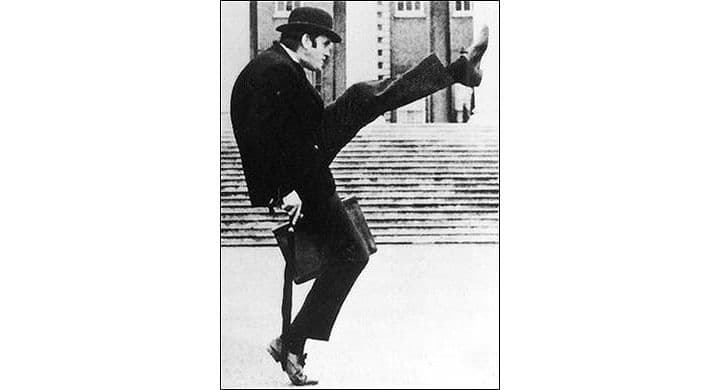
John Cleese said it plainly. Creativity requires the freedom to say things that might be wrong, offensive, or unpopular. He understood that alternative points of view generate innovation and, in his case, create an iconic comedy.
He wasn't defending cruelty. He was defending the messy, uncomfortable space where real ideas are born.
I have been in many meetings where people softened their position; they became vanilla because they did not want to offend or be outed. The result was great; unborn ideas never saw the light of day.
We have created cultures where the risk of offending someone outweighs the value of thinking freely. That is not a small problem. It is an existential one.
That statement cannot be underestimated as the Renaissance was all about offending the church, orthodoxy, and the crown, and if that did not happen, we would be in a very different world.
Is that the world you want for your company?
Self-censorship is rarely dramatic. It doesn't announce itself. It operates quietly — in the pause before someone speaks, in the word choice, in the decision not to raise the question at all. It is the inner conflict we have — should I say it, or will someone put me down?
The result? Conformity dressed up as collaboration. Consensus that nobody actually believes in.
Research on organisational creativity is unambiguous. Psychological safety — the ability to speak without fear of humiliation or rejection — is the single most consistent predictor of high-performing teams. Google's Project Aristotle confirmed it across hundreds of teams.
But psychological safety and political correctness are not the same thing. One opens the room. The other closes it.
The distinction matters enormously for business leaders. One self-censored voice can represent a missed opportunity, pathway, or innovation.
Cleese worked at the BBC during an era when the rules were different. He and his collaborators at Monty Python broke conventions that most people assumed were permanent.
Their willingness to be absurd, offensive, and genuinely unpredictable produced work that outlasted almost everything around it.
Most organisations are not trying to produce Monty Python. But the underlying principle holds. The greatest barrier to innovation is not a lack of smart people. It is the social cost of not letting those smart people be smart.
Leaders set that cost. Every reaction to a bad idea in a meeting, every sideways glance, every "let's park that" — these are signals. They tell people how much thinking costs in your culture.
This is not about being provocative for its own sake. It is about building a room where the difficult question is welcomed rather than managed.
There is no such thing as a bad question, just a bad response.
*Asking questions never asked — Combined Arms Consulting*